Tag Archives: career authors

About This Writing Stuff…

It’s been over a year since I shared a curated collection of articles on writing and publishing.  When I started this blog, About This Writing Stuff was a monthly feature, then quarterly, then whenever I could get to it as life became increasingly hectic. I can’t promise that these will be posted on a regular schedule again, but I’ll do my best.

From the folks at Career Writers, we get tips on writing backstory without info dumping, using an unreliable narrator, and crafting a memoir from traumatic memories.

Kristen Lamb explains why your characters deserve to make choices and deal with the consequences. She also analyzes how AI can be used—and misused—in our field.

From Mythcreant Chris Winkle, we get six easy lessons on how to keep your characters in danger and an overview of six different styles of prose.

All that and much more. Enjoy!

The Art of Deceit: Crafting a Novel With an Unreliable Narrator by Dana Isaacson

Excavating Buried Memories for Memoir by Mimi Nichter

3 Ways to Write Effective Backstory by Jessica Strawser

New Writers, Are You Making These 4 Mistakes? by Anne R. Allen

How Not to Write Your Novel by James Scott Bell

Bookshop.org Partners with Draft2Digital by Debbie Burke

Why Choice—Not Talent—Drives Great Stories by Kristen Lamb

If AI Loves Your Writing, Be Very VERY Worried by Kristen Lamb

Which of These Six Prose Styles Are You Writing? by Chris Winkle

Six Ways to Keep Characters in the Danger Zone by Chris Winkle

What Publishing Contracts Won’t Tell You (Especially Small Press Contracts) by Matt Knight

How to Make Use of Incidental Characters by Kathryn Craft

So Random by Donald Maass


About This Writing Stuff…

This month, Steven H. Wilson discusses some of the elements that comprise a gripping novel while Joe Bunting schools us on the use of rising action in storytelling.

Secrets are revealed over at Career Authors as Tiffany Yates Martin explains the four habits of successful authors, Tracy Clark shares five tips on pacing, and Sharon Short offers strategies for writing from first person POV.

Speaking of POV, third-person omniscient is still alive and well and  that sagacious “mythcreant” Chris Winkle shows us how to use it effectively.  She also shows us ways in which exposition can be used to evoke emotion.

All that and a little more. Enjoy and Happy Holidays!

What Makes a Good Story? by Steven H. Wilson

What Third-Person Omniscient POV is and How to Master It by Chris Winkle

What is Didactic Literature? Have we Outgrown it? by Robert Harrell

4 Survival Skills of Highly Successful Authors by Tiffany Yates Martin

Wait for it! Five Secrets to Perfect Pacing by Tracy Clark via Hank Phillippi Ryan

Six Secrets to Writing from the First Person Point of View by Sharon Short

Nine Things to Consider Before Giving Up on Your Book by Penny C. Sansevieri

Rising Action: Definition and Examples of This Dramatic Structure Element by Joe Bunting

What If You’re Writing Novellas? Now What? by Tara Deal via Jane Friedman

How to Use Exposition to Evoke Emotion by Chris Winkle


About This Writing Stuff…

This month, Emily Inkpen explains why context is as important as motive and conflict and why the consequences of trauma must be addressed in character-driven narratives.

Crystal King serves up a lesson on the importance of food and drink in world building, Ellen Buikema shows us how to develop well-rounded characters by including their hobbies and interests, and Kathryn Craft reminds us that even bad novels have something to teach us.

Looking for a writing prompt? Sarah Gribble encourages us to try pictures (personal note: I’ve done this twice and one of the stories was nominated for a Pushcart Prize) while Kelley J. P. Lindberg coaches us through writing those torturous loglines.

All that and a lot more writerly knowledge. Enjoy!

Why Context is Key in Character-Driven Narratives by Emily Inkpen

Why Trauma MUST be Recognised in Character-Driven Narratives by Emily Inkpen

Food and Drink as Essential Elements in Fiction by Crystal King

4 Questions to Strengthen Lean Manuscripts by Lisa Fellinger via Jane Friedman

5 Reasons to Use Pictures as Writing Prompts by Sarah Gribble

6 Ways Reading Bad Novels Can Make Good Writers by Kathryn Craft

7 Important Things I Wish Every Writer Knew by Rachel Toalson

Words of Wisdom on Writer’s Block by Dale Ivan Smith

How Characters’ Hobbies and Interests Affect the Narrative by Ellen Buikema

Pacing in Writing: 10 Ways to Master Pace and Keep Your Readers Riveted by Joslyn Chase

Loglines—One-Sentence Torture Devices for Writers by Kelley J.P. Lindberg

Draft2Digital 2024 AI Training Survey Results by Kris Austin


About This Writing Stuff…

This month, we begin with Rebecca Jennings’s article from Vox on the importance of TikTok to a creative’s chances of success followed by a rebuttal from publishing industry expert Jane Friedman.

From Good Story Company, Kristen Overman challenges us to try journaling as a route to a solid first draft and Amy Wilson shows us how to describe emotions through action, dialogue, and deep POV.

Speaking of deep POV, Lisa Hall-Wilson at Writers in the Storm expands on that topic while Lynette M. Burrows explains the differences between tension, suspense, and conflict.

On Anne R. Allen’s blog, guest Jodie Hurst addresses the pros and cons of that 800-pound digital gorilla in the room—artificial intelligence.

All that and a little more. Happy St. Patrick’s Day!

Want to sell a book or release an album? Better start a TikTok by Rebecca Jennings

Author Platform is Not a Requirement to Sell Your Novel or Children’s Book by Jane Friedman

How to Describe Emotion by Amy Wilson

Journaling to Productive First Drafts by Kristen Overman

After Your First Draft: The Search for Meaning by Patti Callahan Henry

Beguile Your Readers with Tension, Suspense, and Conflict by Lynette M. Burrows

How to Remove the Author Voice for Deep Point of View by Lisa Hall-Wilson

Don’t Kill Your Darlings by Philip Athans

Substack is Both Great and Terrible for Authors by Jane Friedman

How to Make Your Writing More Sensitive – and Why it Matters by Melissa Haun

It’s the Age of AI: How to Survive and Thrive as a Writer by Jodie Hurst via Anne R. Allen


About This Writing Stuff…

This month, writer pal Kathryn Craft shows us how to use weddings and funerals in our stories to explore characters and heighten emotions. Over at Mythcreants, Oren Ashkenazi examines the ever-popular literary device known as unreliable narrator.

Kristen Overman offers advice on self-editing and developing strong characters while Meredith Lyons talks about keepin’ it real in paranormal fiction. Do you feel pressured to sacrifice your social time for your writing? John Gilstrap reminds us not to feel guilty for living our lives.

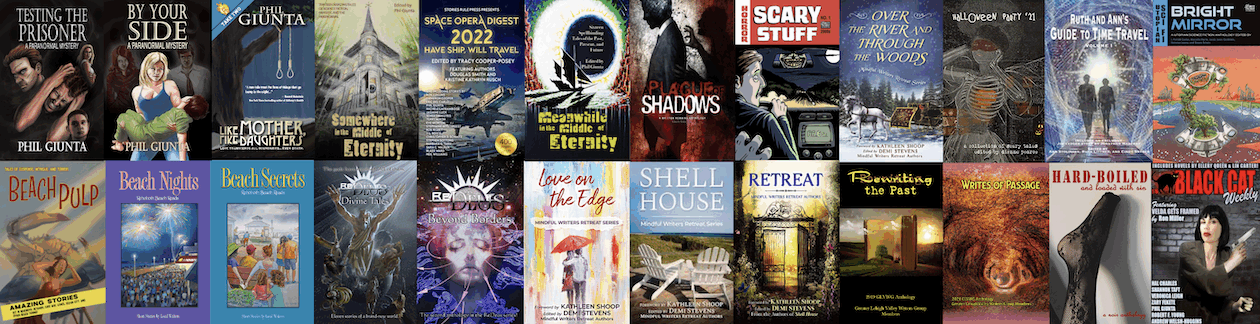
Kelsey McConnell discusses the need for trigger warnings in horror novels. This is a timely topic given that I just released the second edition of Testing the Prisoner, my first paranormal mystery novel from 2009 that deals with child abuse and domestic violence.

All that and a lot more. Enjoy!

Writing Believable Characters by Michal Leah

There’s Always a Choice: Revision Techniques to Make Your Writing Stronger by Kristen Overman

How Subplots and Plot Filaments Lend Texture and Depth to Any Novel by Michael Craft

Why Is Strong Character Development Important? by Kristen Overman

Marry ’em and Bury ’em: Weddings, Funerals, and Your Novel by Kathryn Craft

Is There a Place For Trigger Warnings in Horror Books? by Kelsey Christine McConnell

How to Write a Realistic Paranormal by Meredith R. Lyons

How to Point Readers’ Attention in the Right Direction by Jami Gold

How to Increase Your Productivity When You Don’t Feel Productive by James Scott Bell

Writer’s Guilt by John Gilstrap

Unreliable Narration: A Useful Tool or Just Hype? by Oren Ashkenazi

Atmosphere Literary Definition: Genre Examples that Evoke Emotion by Joslyn Chase


If you’re a LibraryThing member, I’m running a giveaway for Testing the Prisoner! Six winners will receive a signed copy. Check it out here. Ends October 25th.

Testing the Prisoner is available now in ebook ($2.99) and paperback ($18.99)!

Testing the Prisoner print promo

About This Writing Stuff…

Nice to hear from a few writer friends on the blog this month. Sara Karnish reminds us about proper critique etiquette and discusses the writer/editor relationship with Pattie Giordani.

It is said that your focus determines your reality. That applies to fictional characters as well. However, there are occasions in real life when we deliberately ignore or avoid something unpleasant. Writer pal Kathryn Craft shows us effective ways to depict that in our characters.

Over at Good Story Company, Amy Wilson draws a distinct line between editing and revision while Kristen Overman delves into the “chosen one” trope and how to ensure your hero is up to the task.

Struggling with book marketing? With a writing drought? With imposter syndrome? We got you covered on all three this month.

All that and a little more. Enjoy!

Follow the Energy of Denial by Kathryn Craft

Chosen One Stories: Is Your Hero Worthy of the Journey? by Kristen Overman

How Right Do Your Characters Have to Be? by Terry Odell

How to Give a Critique (Without Being Too Critical) by Sara Karnish

I Would Rather See My Books Pirated Than This (Or Why Goodreads and Amazon are Becoming Dumpster Fires) by Jane Friedman

How to Market Your Books to Get Worldwide Exposure by Diana Urban

How Authors Use Preorders to Promote New Books in 2023 by AJ Yee

5 Things Influencers Look for in a Book by Ryan Steck

5 Ways to Survive a Publishing Drought by Katrina Kittle

The Difference Between Editing and Revising by Amy Wilson

The Author/Editor Relationship: A Q&A with Pattie Giordani by Sara Karnish

How to Escape Imposter Syndrome in Your Writing Life by Lynette M. Burrows