This week, Lawrence Block reminds us that while real life often does not make sense, our fiction must. Ruth Harris provides a handy checklist on effective dialogue while Jami Gold and Janice Hardy expound ways to ensure that our characters are not puppets to plot.
Calling all Scrivener users, Gwen Hernandez and Joslyn Chase offer tips on using some of the app’s features to organize our work.
Jennifer L. Harris shows us how to determine whether or not our story ideas will support a full-length novel. Over at the Write Practice, David Stafford reviews methods for applying the principle’s of the Hero’s Journey, and Jane Friedman delivers a comprehensive guide to writing query letters.
My attempt to restore this weekly feature on my blog was thwarted a few months into the year by a series of challenging, distressing, exhilarating, and generally overwhelming events—from editing a new speculative fiction anthology to the death of my mother-in-law, from a six-week home renovation to a partial roof collapse at my place of employment that caused 100-hour work weeks, from caring for a sick bunny (he’s better now, thankfully) to building a new website for one of the small-press publishers I work with.
My bunny, Peanut!
Despite such “interesting times,” I managed to write four new chapters in my SF novel-in-progress and hammered out a 7K-word short story just this week. Honestly, that’s paltry progress compared to my usual output, but I’m grateful for anything given the mayhem of 2017—and we still have four months to go!
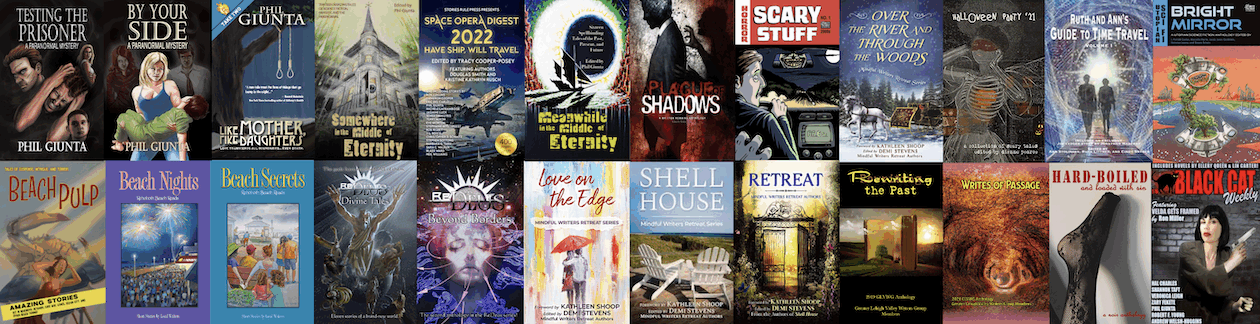
On a high note, my paranormal mystery novella, Like Mother, Like Daughters, was accepted by Firebringer Press and should be released next year as an eBook, audio book (recorded by yours truly), and in paperback paired up with a vampire novella written by Steven H. Wilson, fellow scribe and owner of Firebringer.
So much about this excites me beyond the obvious thrill of a new release. We plan to produce the paperback in the fashion of the old ACE doubles where you read one novella, then flip the book over read the other. Readers of a certain age (ahem) and older grew up enjoying those and I relish the prospect of producing a book in that format today.
Additionally, the speculative fiction anthology I’m editing is actually volume three in the Middle of Eternity series, also published by Firebringer. This third book, Meanwhile in the Middle of Eternity, is also slated for a 2018 release.
Back on topic, About This Writing Stuff… might end up appearing on a monthly basis rather than weekly as I try to balance my life and catch up on my writing, editing, and publishing schedules, not to mention maintain my health and sanity. Until then, I hope you find the articles below useful.
From Digital Book World, Beth Bacon teaches us about Creative Briefs, while Gordon Warnock urges not to disregard libraries when marketing our books. Over in the Kill Zone, James Scott Bell talks tough and Jordan Dane wants us to keep it real.
Kristen Lamb and Janice Hardy sub for Jami Gold on her blog with a deep dive into antagonists and conflict. As an aside, Jami is battling a health issue that she openly discusses on her blog and I want to take a moment to wish her the best.
This week, Kristen Lamb and John Gilstrap talk story synopses to attract agents while Cynthia Shannon offers tips to engage readers on Goodreads.
We blur the line between science and science fiction with Veronica Sicoe and Kate Gwynne, who respectively explore interstellar communication and storytelling through virtual reality.
Amazon initiates new rules regarding reviews, while a common question is answered about the quality of self-published versus traditionally published books.
Janice Hardy and K.M. Weiland talk about tricks, surprises, and honesty in our fiction.
This week, Kristen Lamb delves into the torture of writing a synopsis while Dana Kaye wants authors to stop poor social media practices. Four is our lucky number this week as Donald Maass preaches pacing, Janice Hardy describes descriptions, and Written Word Media covers covers!
Speaking of Written Word Media, they also provide a detailed discourse on what it means to be a hybrid author as well as tips for an effective author website.
Are you a fantasy writer? As of October 12, Tor.com will be open for submissions.